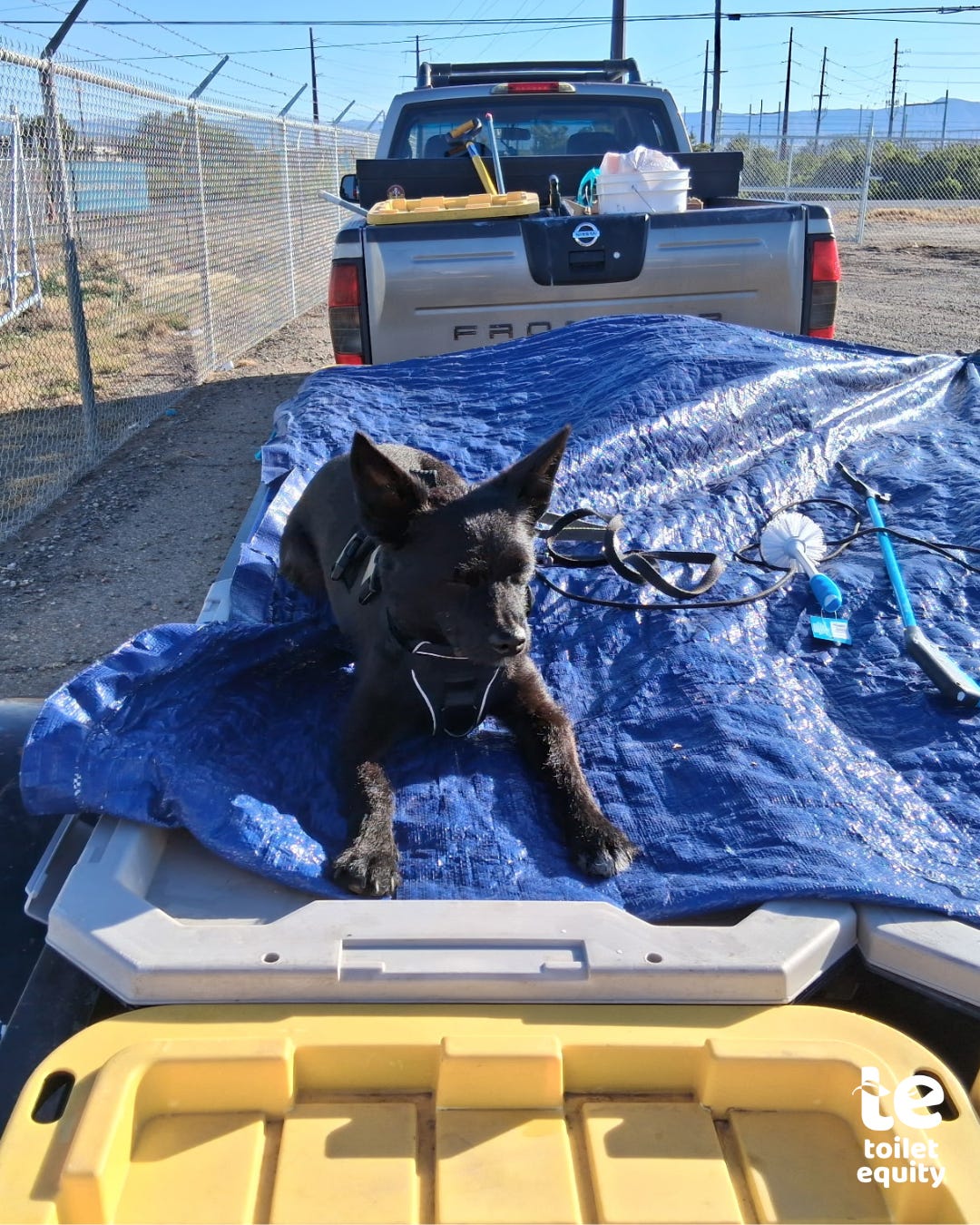
Compost needs time.
That is one of the least glamorous and most important parts of the process.
When we collect poop from a Toilet Equity toilet, it isn’t compost yet. It has potential, but potential isn’t the same thing as readiness. So we give it what it needs: carbon. Air. Moisture. And then, time.
But we can only do so much.
We tend the conditions. A whole living community does the rest.
Bacteria and fungi break things down. Tiny organisms feed on what they find and, in turn, become food for others. Heat builds. Materials change. Each part of the system affects the others.
Slowly, something most of us think of only as waste becomes something else entirely: dark, rich, living soil.
There’s a temptation, when you work at a nonprofit, to tell stories about people the same way we sometimes tell stories about services: We helped this person. We changed this life.
But people aren’t projects. And Toilet Equity doesn’t transform people.
People do their own becoming.
What we can do—for compost, and for one another—is pay attention to the conditions. And recognize that none of us exists outside the ecosystem.
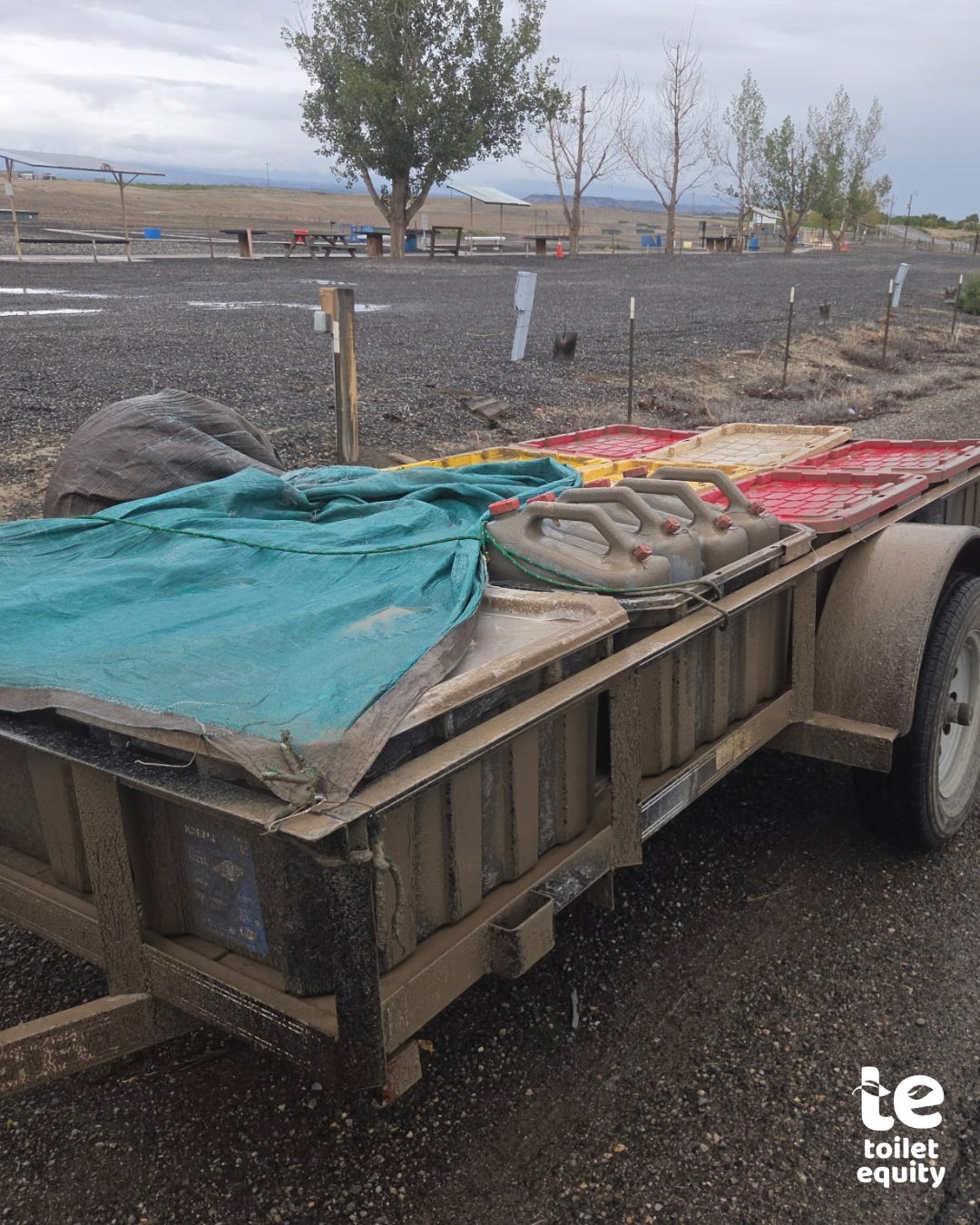
It started with a dirty toilet.
Before Crystal worked for Toilet Equity, she used our toilets.
At the time, she had been living without stable housing for nearly 15 years. A toilet mattered. As she puts it simply: “[Toilet Equity] gave me a place to poop.”
Then one day, the toilets were dirty.
So Crystal cleaned them.
No one had hired her to do it. She saw something that needed doing, found supplies, and did it. Then she did it again.
Eventually, we noticed, and offered her a job.
Getting hired wasn’t simple. Without stable housing, getting the identification and paperwork required to work took weeks. Crystal tracked down her documents, found people who could verify what needed verifying, and kept cleaning the toilets while she worked through it.
We kept the job open.
And once Crystal was officially on the team, something happened that nobody at Toilet Equity could have manufactured.
The toilets became her toilets.
Crystal knew who used them. She knew who was damaging them. She recruited people in the community to help move sawdust and keep them clean. She developed her own uncompromising rules for how they should be treated.
Today, she says, “That’s my job. That’s my name on there.”
Toilet Equity didn’t create that ownership. Crystal did.
And pretty quickly, she wasn’t just caring for the toilets. She was shaping the ecosystem around them: bringing other people in, setting expectations, and caring for something the whole community depended on.
The job gave her ownership a place to take form. In return, Crystal changed the job—and the toilets—for everyone around her.
That’s how living systems work. Everything is giving something to everything else.
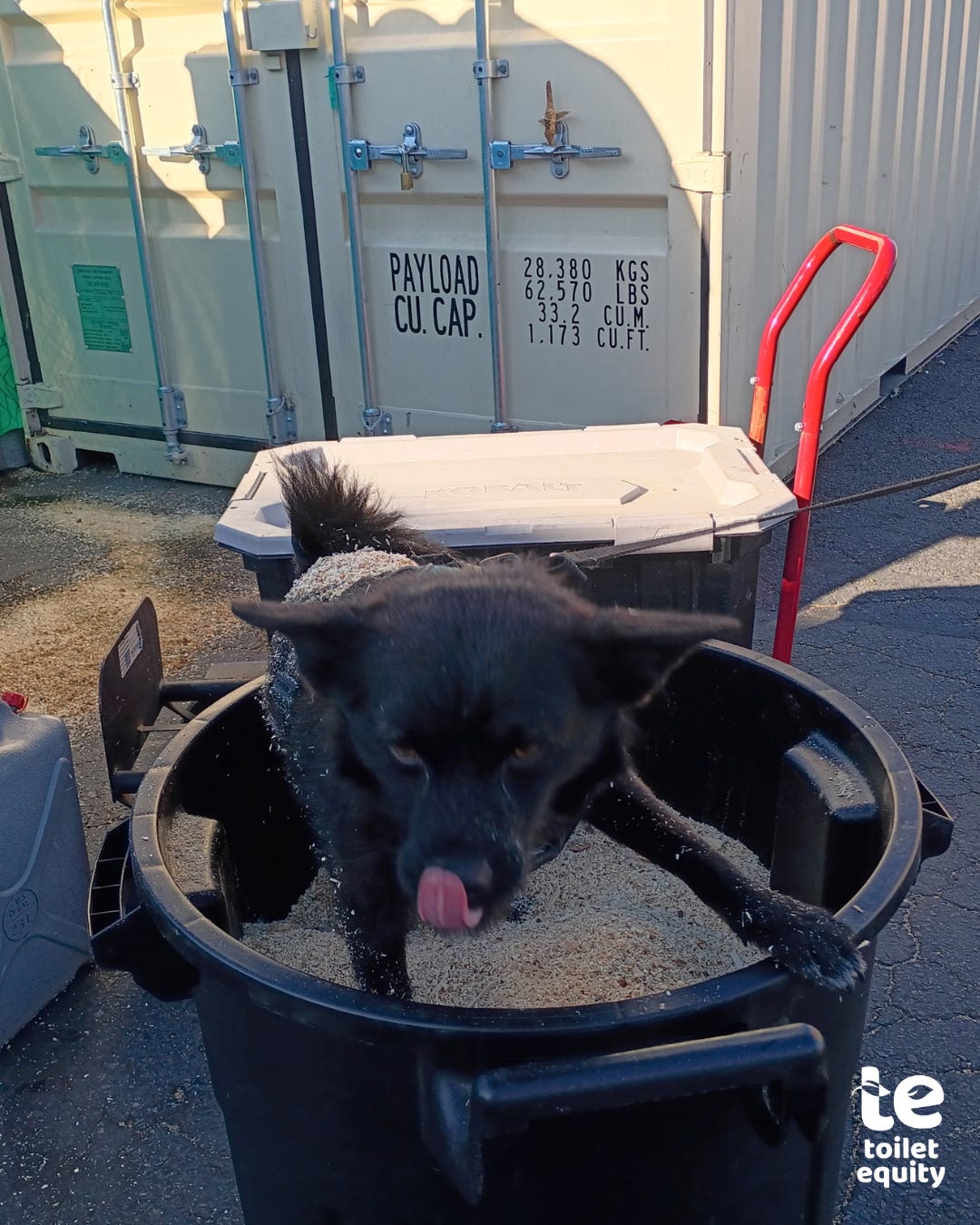
Incubation isn’t always tidy.
Neither is composting.
You can give a compost pile everything you think it needs and still have to pay attention. Is it hot enough? Too wet? Too dry? Does it need more carbon, more air, more time?
And sometimes one part of the system needs something different for a while.
Incubation isn’t passive. But it isn’t control, either.
You pay attention. You respond to what is actually happening. You make adjustments. And you resist the urge to demand that everything happen according to your timeline.
A few months after Crystal started working with us, she disappeared.
Days passed, then weeks. We couldn’t find her. We were worried enough about her safety that we filed a missing-person report.
Eventually, Crystal resurfaced. She had needed to leave to get sober.
And when she came back, her job was still there.
By then, there wasn’t really anyone else who could replace Crystal. She knew the toilets, knew the people who used them, knew what needed attention before anyone else noticed it. She wasn’t adjacent to the work anymore. She was part of the whole thing.
So when Crystal needed to step away, we didn’t replace her. We waited, and hoped.
Crystal remembers that part.
“She took a chance on me and never gave up,” she says. “She didn’t abandon me.”
A living system depends on its relationships. When one part needs something, the others respond. Not because one part is more important than the rest, but because they have become connected.
Sometimes tending the conditions looks surprisingly uneventful: a job is still there. A person is still welcome. There is enough room to come back.
Then, more time.
Crystal came back.
She worked while the Resource Center closed. She worked while the HomewardBound Emergency Shelter, where she and her dog had been staying, closed. While some of the structures around her disappeared, Crystal kept navigating systems that often require people living in crisis to be extraordinarily organized, patient and persistent.
Eventually, after a tremendous amount of work on her part, Crystal got an apartment.
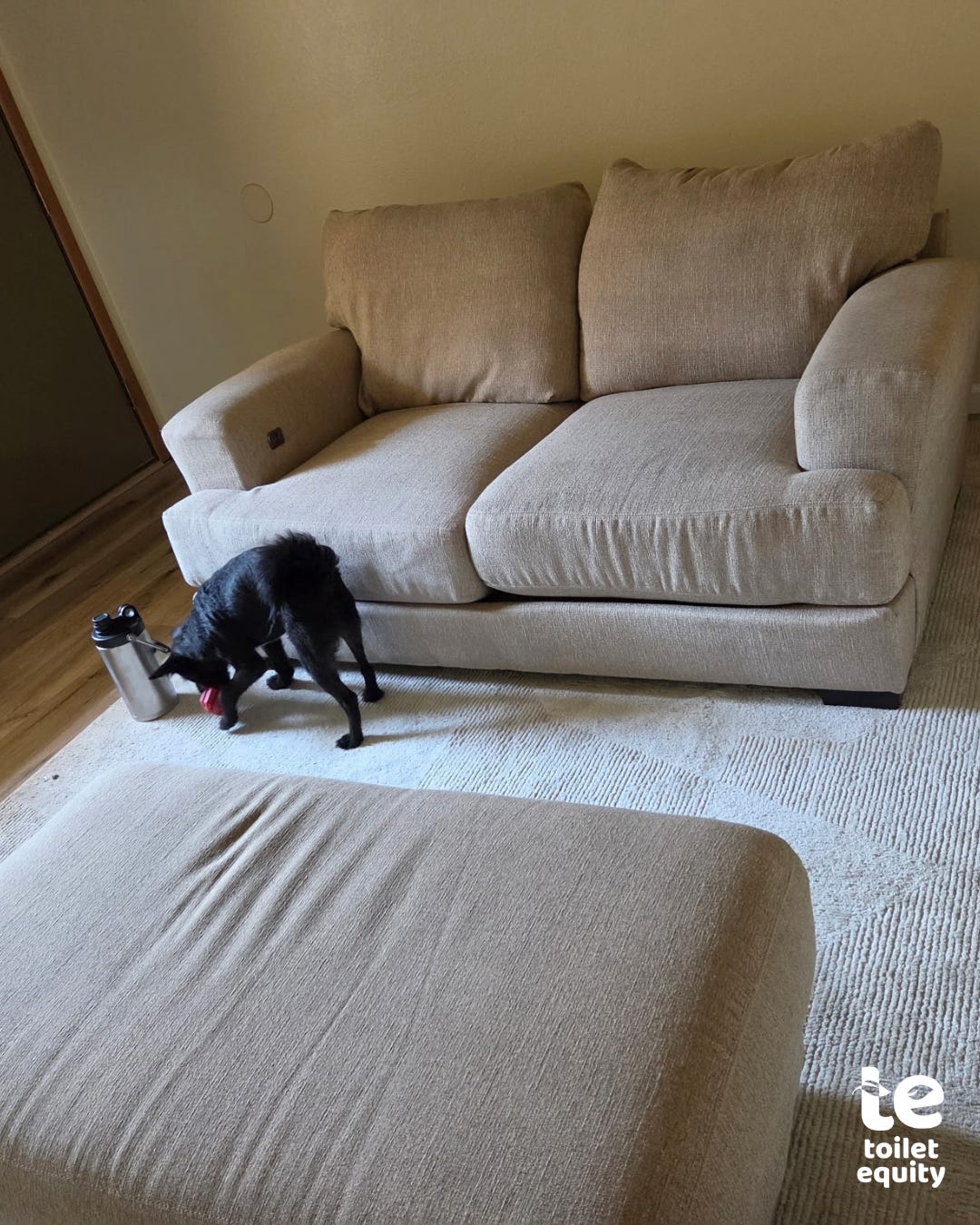
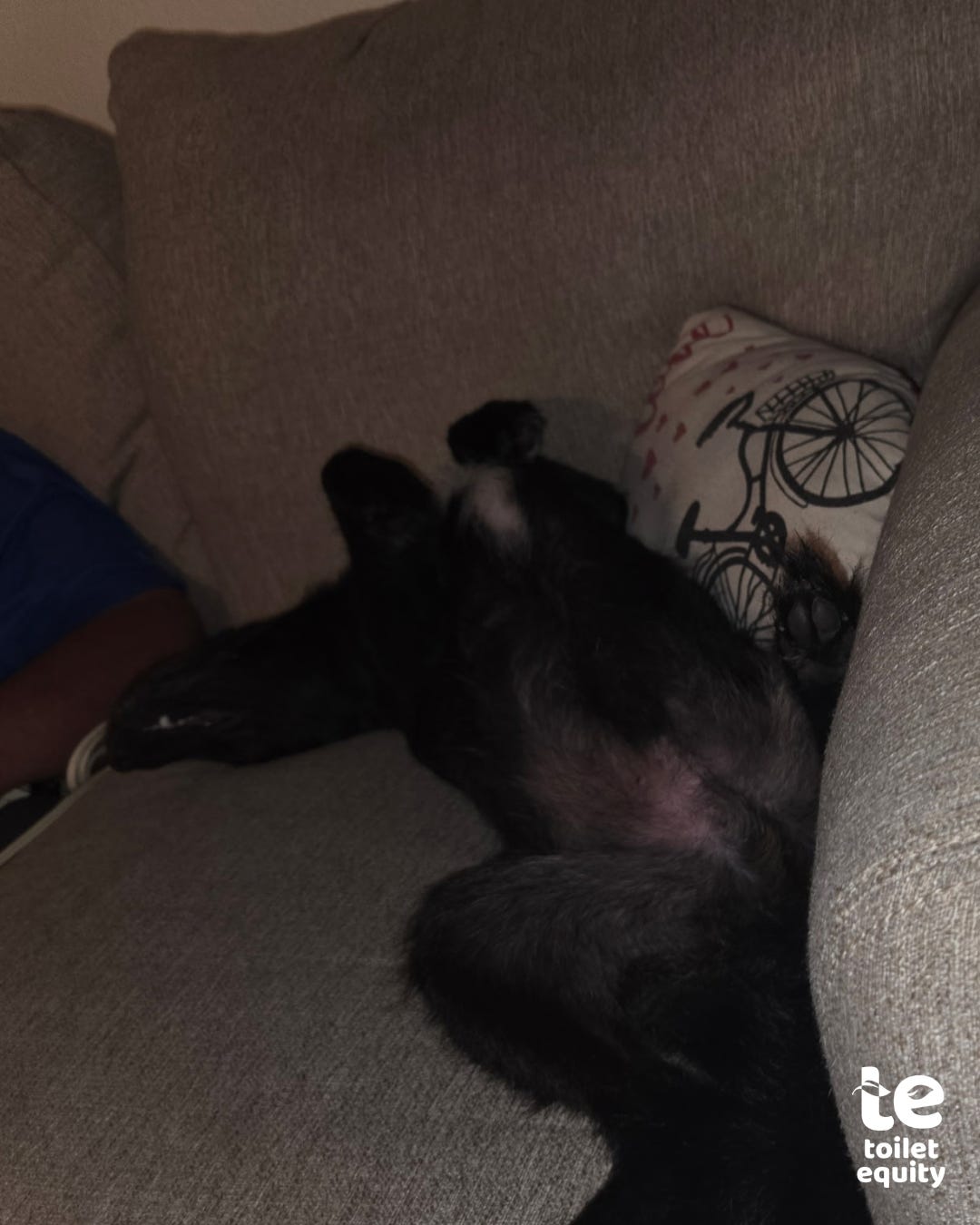
She and her dog, Lucifer, have a home now.
And at Toilet Equity, Crystal isn’t the Maintenance Worker we once hired because we caught her cleaning our toilets.
She’s our Operations Technician.
She earned that role by being very, very good at what she does.
She notices things. She solves problems. She takes responsibility. She cares intensely about the quality of her work. And she has become someone other people look to for how these toilets should be cared for.
Crystal has a rule about work:
“I don’t care if you’re picking up shit or if you’re counting money. Do the best that you can do and it will pay off.”
She has.
And so has the community around her.
Every toilet Crystal cares for is a toilet someone else can use. Every problem she solves strengthens something other people depend on. Every person she brings into the work changes the ecosystem again.
What are we incubating?
At Toilet Equity, we spend an unusual amount of time thinking about what happens when you give poop the right conditions.
What if, instead of treating human “waste” as something useless that needs to disappear, we gave it time and a safe place to become something else?
That question is at the heart of composting.
But compost isn’t made by any one thing. It’s made by relationships: between carbon and nitrogen, moisture and air, heat and time, and an enormous community of living things each doing their part.
Maybe the same is true of us.
What becomes possible when we create those conditions for one another?
A toilet.
A job.
A little flexibility.
A second chance, or a seventeenth.
A place where making a mistake doesn’t mean being cast out.
A place where you can contribute something real and have that contribution recognized.
A place where somebody expects you back.
None of those things transforms a person. They’re conditions. The becoming belongs to the person.
But the conditions belong to all of us.
The people who use the toilets. The people who care for them. The people who haul sawdust and compost. The people who give money. The people who notice when something isn’t working and decide to do something about it.
Like any living ecosystem, we depend on one another. We contribute different things. We need different things. And the whole becomes possible because we’re in it together.
Sometimes what grows is soil. Sometimes it’s belonging.
And sometimes it’s an Operations Technician named Crystal, making damn sure her toilets are clean.